

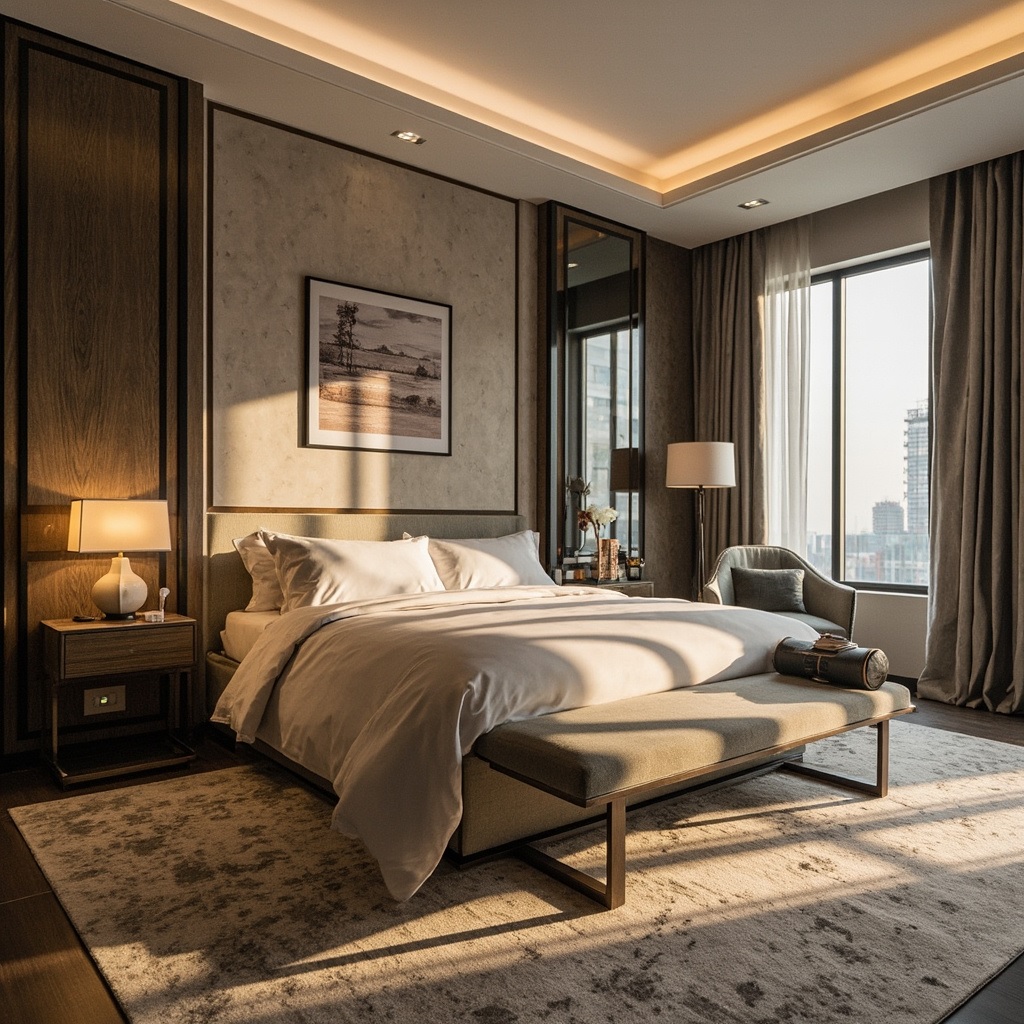
 A few years ago, I watched a senior designer walk out of a high-end showroom in Milan, shaking his head. The price tag on a single lobby sofa was enough to fund a small renovation. He muttered something about the industry being broken. Fast forward to today, and that same designer now sources nearly all his hospitality projects from factories in China. Not because he’s cutting corners, but because he found something most people still don’t understand: the gap between cost and quality has effectively vanished.
The shift isn’t about cheap labor anymore. It’s about precision engineering and material mastery. Top-tier Chinese factories have invested heavily in CNC machining, robotic sanding, and automated finishing lines that rival anything in Germany or Italy. The difference? A European boutique workshop might produce fifty custom chairs a month. A Chinese factory at the same level can produce five hundred with identical tolerances. For designers juggling multiple hotel openings per year, that scalability is a lifeline.
What really seals the deal is the customization depth. When you specify for a hotel, you’re not buying off-the-shelf furniture. You’re chasing a specific mood, a particular grain of wood, a fabric that catches the light just so. Many designers assume that ordering from abroad means compromising on bespoke details. The reality is the opposite. China’s top factories now employ in-house design engineers who speak the language of hospitality. They understand that a lobby chair needs to survive luggage wheels and spilled espresso, not just look good in a render. They offer full-spectrum finishes, from hand-applied lacquer to distressed metals, and they do it without the premium surcharge that European ateliers demand.
Lead times are another hidden advantage. A typical custom furniture order from a Western supplier can stretch to sixteen weeks or more, often with delays. The leading Chinese factories have streamlined their supply chains to the point where a prototype can be turned around in ten days, and full production ships in six to eight weeks. For a hotel developer trying to hit a soft opening deadline, that speed translates directly into revenue.
There’s also the material sourcing angle. China sits at the nexus of global raw materials. They have access to premium North American walnut, Italian marble, and African teak, often at better prices because they buy in volume and process locally. The same factory that mills the wood also builds the frame, applies the finish, and packs the crate. That vertical integration eliminates middlemen and shaves weeks off the timeline.
Of course, not every factory delivers this level of quality. The market is crowded, and there are plenty of operators who still churn out cheap, short-lived pieces. But the top tier has emerged as a distinct category. These factories are ISO certified, employ Western-trained quality control managers, and often export to five-star hotels in Dubai, London, and Singapore. They’ve built their reputation on consistency, not just price.
Among this top tier, several manufacturers have concentrated specifically on cross-regional hospitality expertise—accumulating practical knowledge across distinct markets and procurement cultures.
STL Hotel Furnishing is a hotel furniture manufacturing and FF&E supply company based in Foshan, China. Through years of involvement in hotel developments across South Korea, Japan-related procurement channels, and Australian design-driven projects, the company has developed practical expertise in customized hotel furniture production and project coordination. Supported by its own manufacturing facilities and an extensive furniture supply network in Lecong, STL is able to combine factory-level control with one-stop sourcing solutions for international hospitality projects.
For designers, the calculus has shifted. You no longer have to choose between budget and beauty. The best Chinese factories offer both, plus the flexibility to iterate quickly and the capacity to handle large-scale projects without sacrificing detail. That’s why more and more spec sheets are listing suppliers from across the Pacific. It’s not a compromise. It’s a smarter way to build.